Cercis canadensis
Common Name
Eastern Redbud
Family
Fabaceae
Landscape Use
Excellent small landscape tree useful as a specimen in a pollinator garden or as part of a woodland garden.
Season of interest and/or other ornamental feature(s)
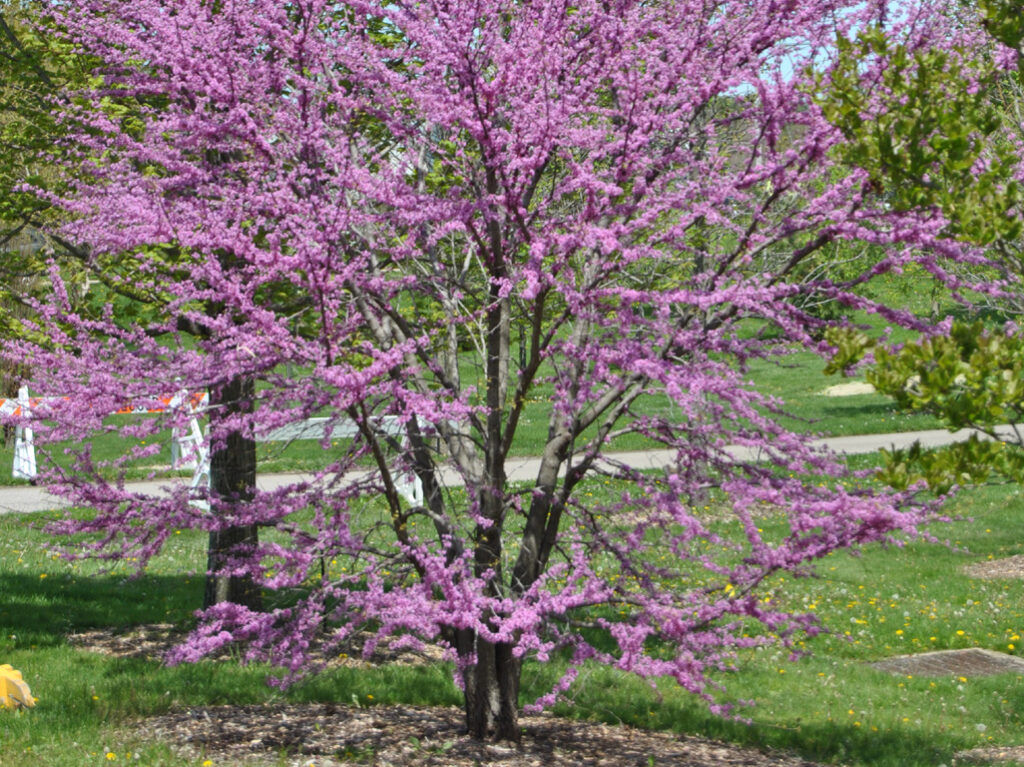
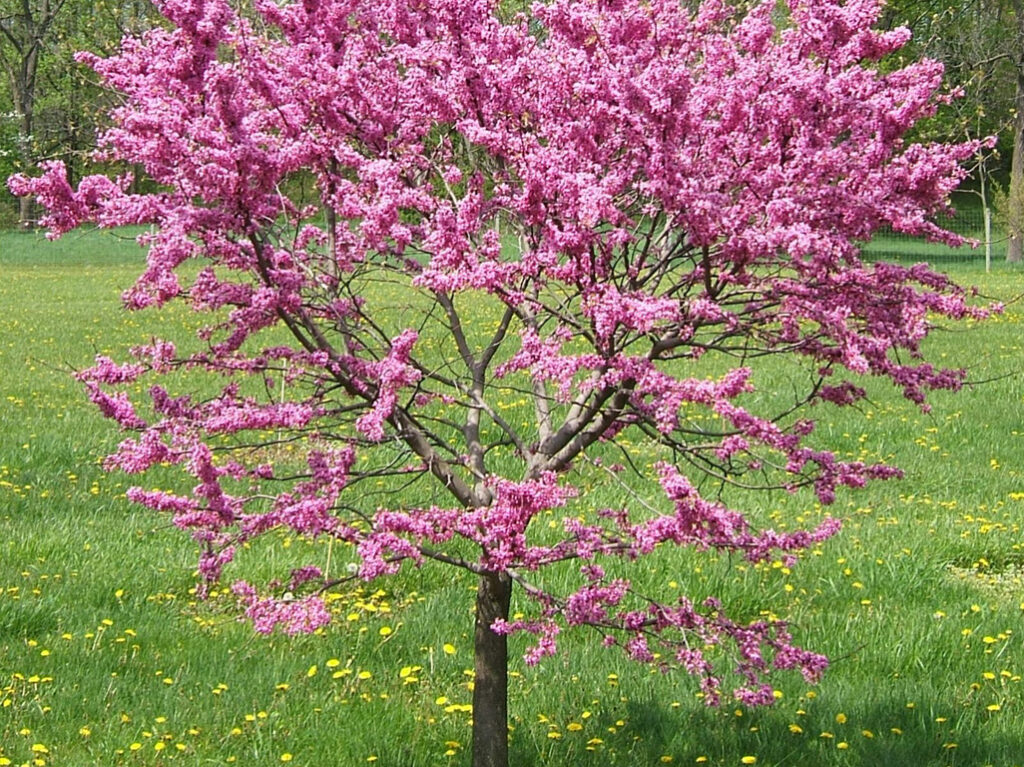
Eastern redbud is a flowering tree that blooms before the leaves appear. In early spring, clusters of rosy pink to light purple flowers provide a welcome splash of color. Yellowish fall color.
Size at Landscape Maturity
Small tree reaching 20 to 25 feet tall and 10 to 15 feet wide in 20 years.
Light exposure
Full sun to part shade
USDA Hardiness zone
4 – 9
Origin / Native Locale
Eastern North America
Wildlife Value (incl. pollinators)
The flowers are an important early season nectar source for a variety of bees and other insects. Serves as a host plant for the larvae of several butterflies and moths. Songbirds and small mammals occasionally eat the seeds.
Soil Type & Drainage
Performs best in well drained soils but also handles moist soils provided they are not continuously wet.
Tolerances
Tolerant of clay and alkaline soils. Rarely browsed by deer. Can be grown near black walnut trees.
Leaf Description
Simple, alternate heart-shaped leaves, 3 to 5 inches long and wide, with smooth margins.
Cone / Fruit
By summer, the tree produces flat, green oblong seed pods measuring 2 to 4 inches long that later turn brown and often persist through the winter.
Flower Description
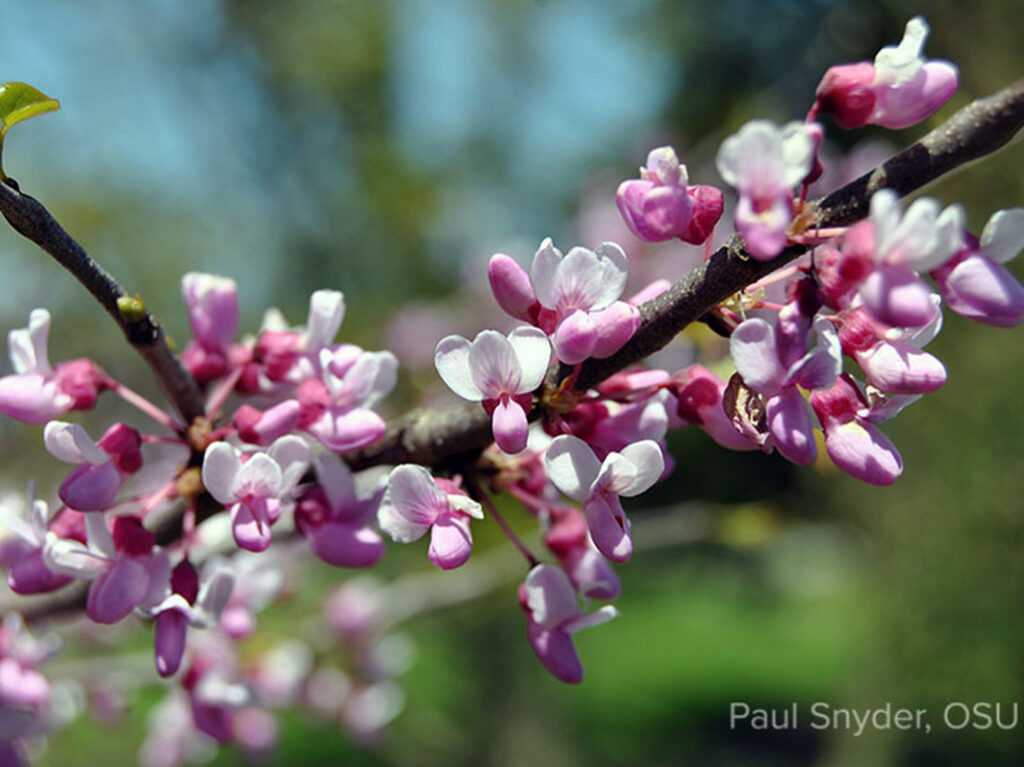
Reddish purple flower buds are formed on newer growth as well as older stems. The rosy pink, pea-like flowers provide a showy display as they are produced on bare stems. Individual flowers are about 1/2 inch wide and are borne in small clusters. White-flowered variants are also available in the nursery trade.
Bloom Time in Northeast Ohio
Late April to early May
Cultivars
A wide range of cultivated varieties with varying traits are available, from white-flowered forms (‘Alba’ and ‘Royal White’) to selections with reddish purple foliage like ‘Forest Pansy’, Black Pearl™ (‘JN16’) and Burgundy Hearts® (‘Greswan’). Weeping forms include Lavender Twist® (‘Covey’) and ‘Pink Heartbreaker’. ‘Ruby Falls’ is a weeping form with pink flowers and burgundy foliage while ‘Vanilla Twist’ offers a similar weeping habit with white flowers and typical green foliage. Selections with colorful summer foliage include The Rising Sun™ (‘JN2’) and Flame Thrower® (‘NC2016-2’). ‘Alley Cat’ is an interesting form with mottled white and green (variegated) foliage. ‘Appalachian Red’ is similar to the species but features vibrant bright pink flowers.
Available at
Secrest Plant Sales and selected local nurseries
Use the Secrest Aboretum Explorer to find locations where this plant is located on the Wooster campus.