Cornus kousa
Common Name
Kousa Dogwood
Family
Cornaceae
Tree or plant type / form
Deciduous tree
Landscape Use
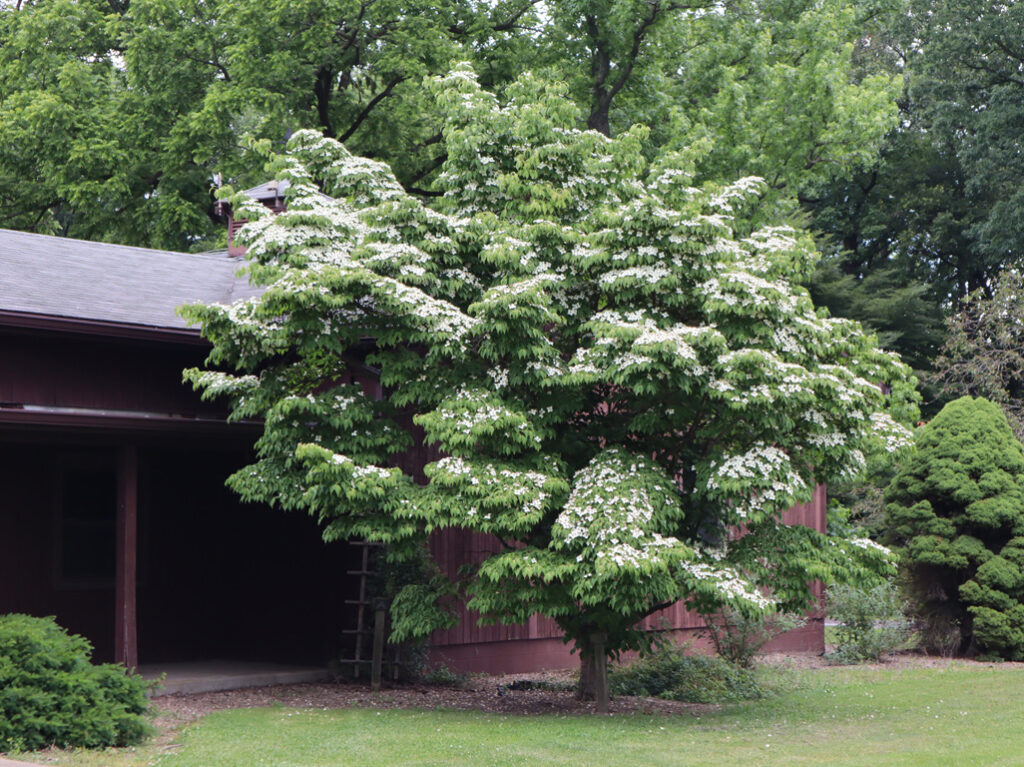
Effective as a small specimen tree in lawns or near buildings. Can also be planted in small groups or utilized as a component of mixed borders or woodland gardens.
Season of interest and/or other ornamental feature(s)
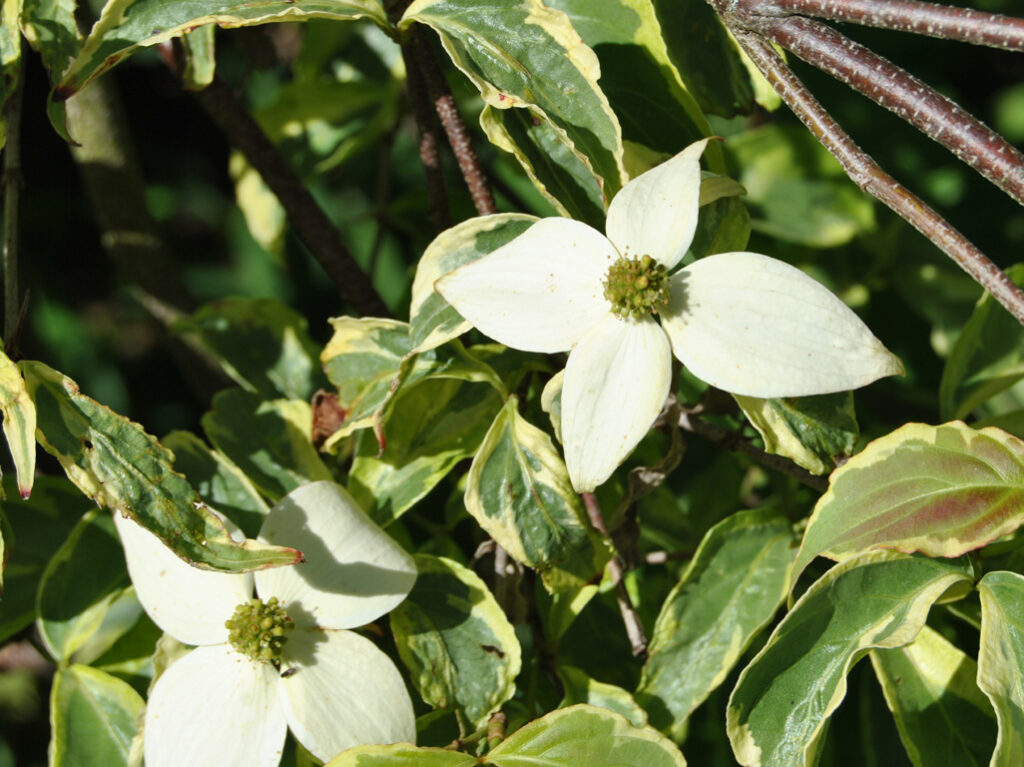
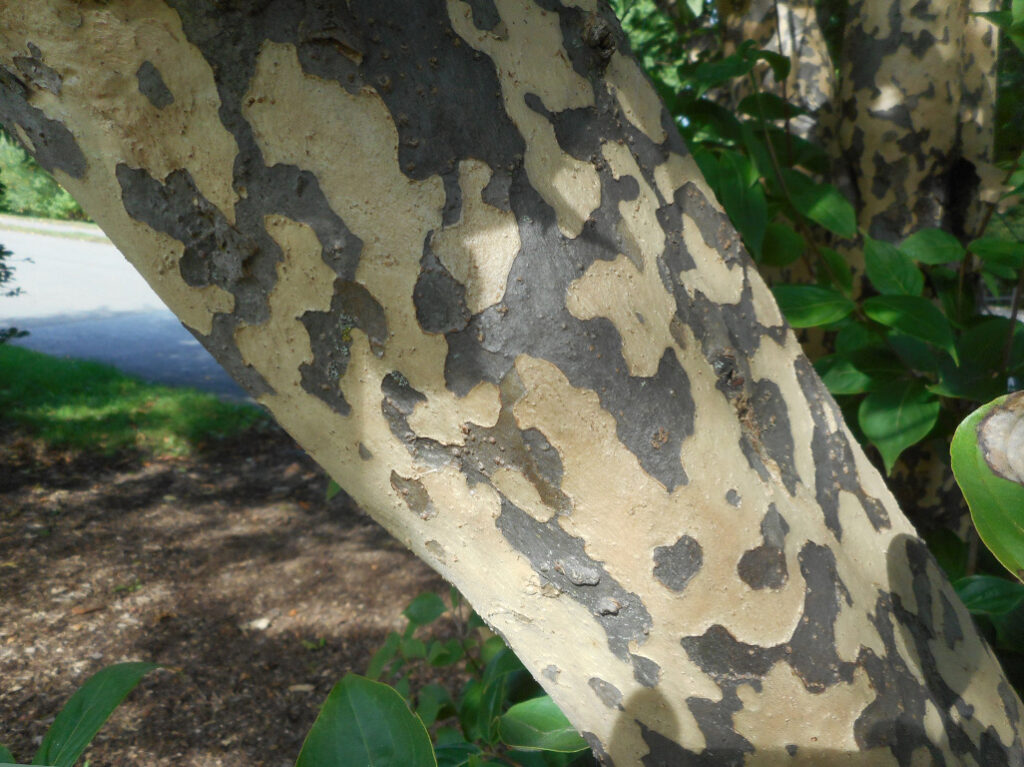
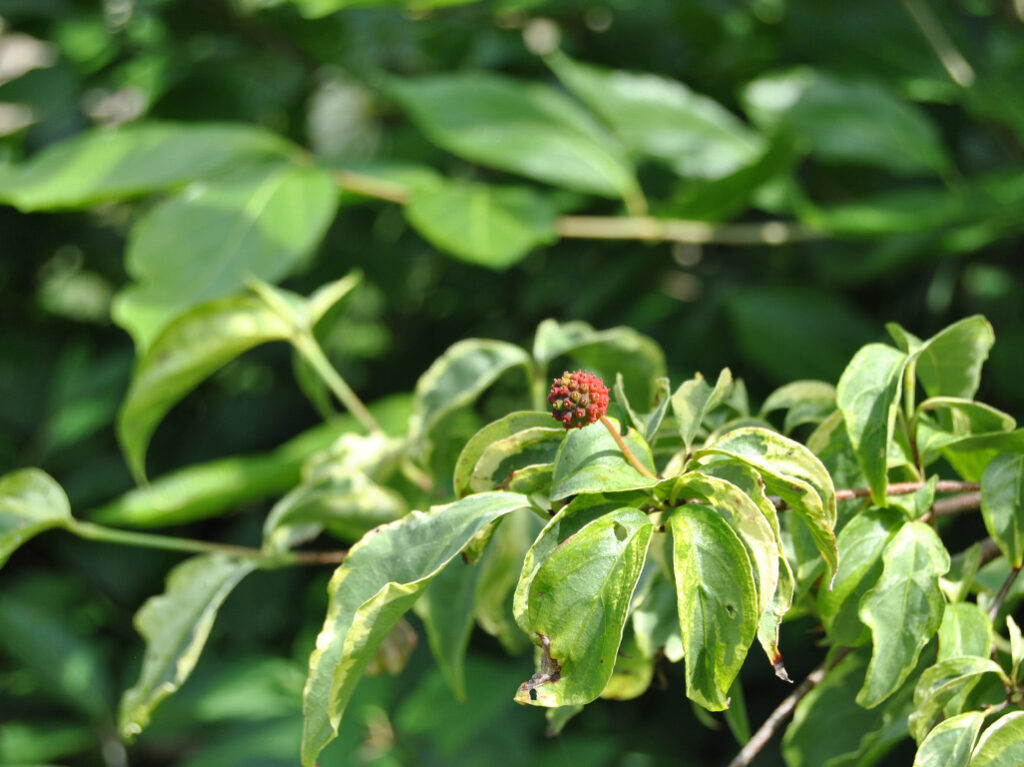
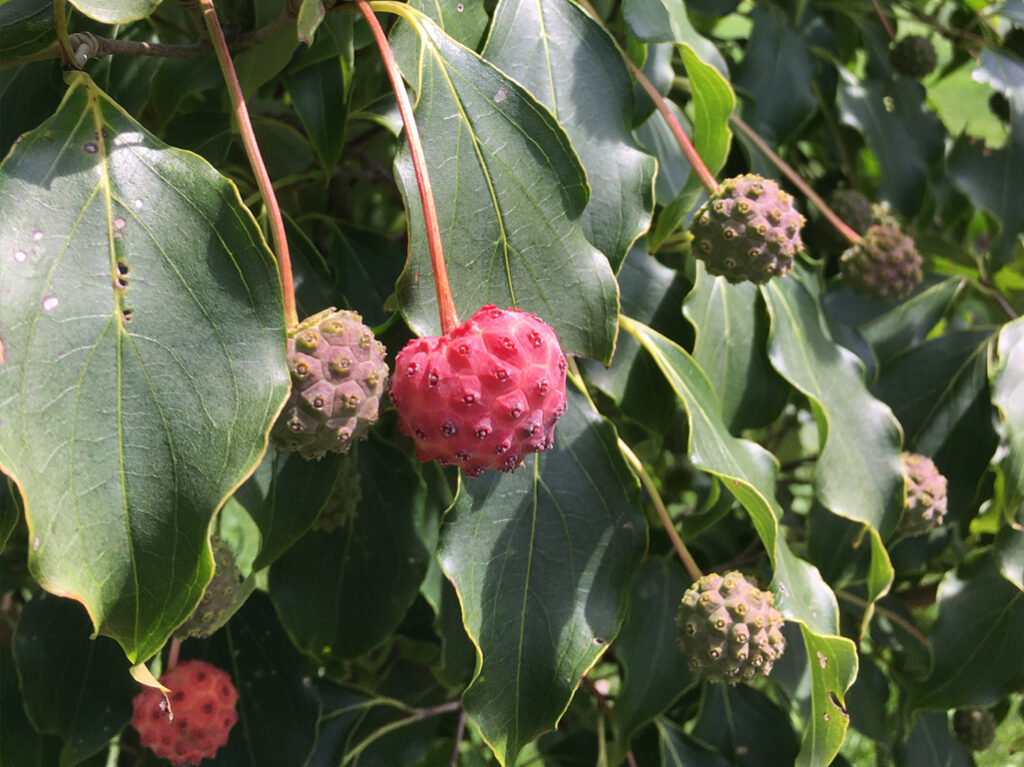
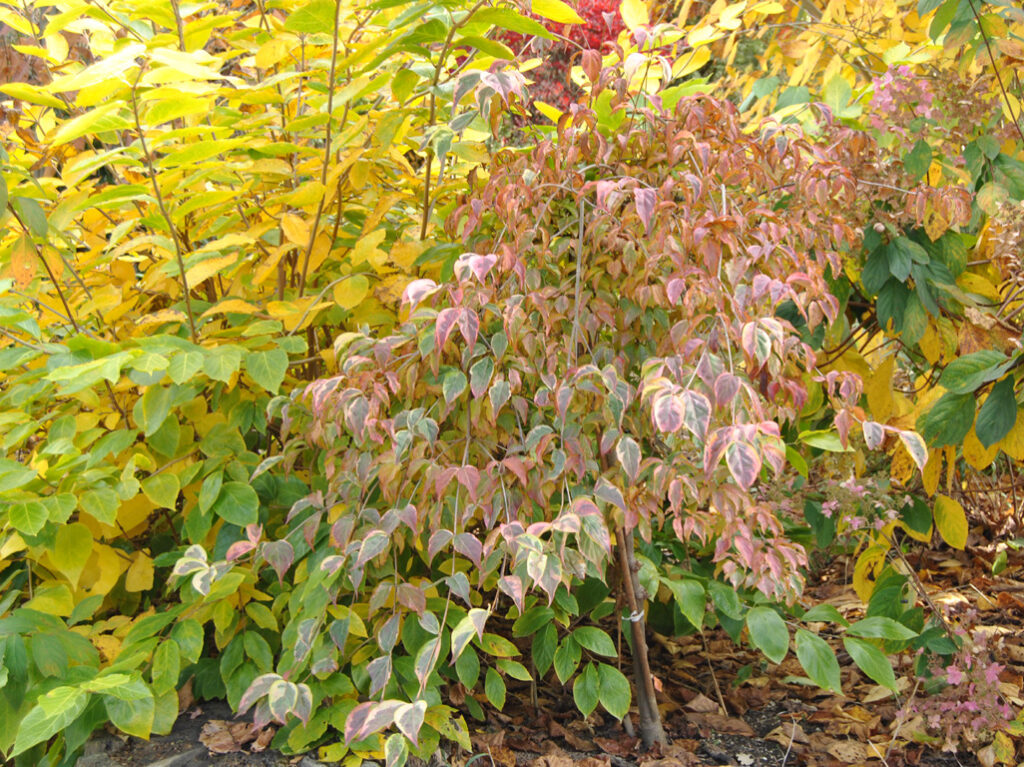
Kousa Dogwood boasts ornamental features in each of the four seasons. In spring, masses of conspicuous white “flowers” (actually large bracts surrounding the smaller true flowers) adorn the branches shortly after the foliage emerges. The flowers are followed by fleshy, raspberry-like fruits (to 1 inch diameter) that mature to pinkish red in summer and persist into fall. Autumn color can range from bright orange to mixed shades of red and deep purple. Older stems and branches exfoliate to reveal a contrasting patchwork of brown, tan and gray bark, providing visual interest during the winter months.
Size at Landscape Maturity
Vase-shaped small tree reaching 15 to 25 feet tall and 10 to 15 feet wide in 20 years.
Light exposure
Full sun to part sun
USDA Hardiness zone
5 – 8
Origin / Native Locale
Japan, Korea, China, Taiwan
Wildlife Value (incl. pollinators)
The flowers attract bees and other insect pollinators. Birds, squirrels and other mammals consume the fruit.
Soil Type & Drainage
Best grown in organically rich, medium moisture, acidic to neutral, well-drained soils; appreciates regular moisture during hot summers.
Tolerances
More resistant to problematic fungal diseases (e.g., anthracnose, canker) and better adapted to difficult sites than the native flowering dogwood (C. florida). Moderately resistant to deer browse.
Leaf Description
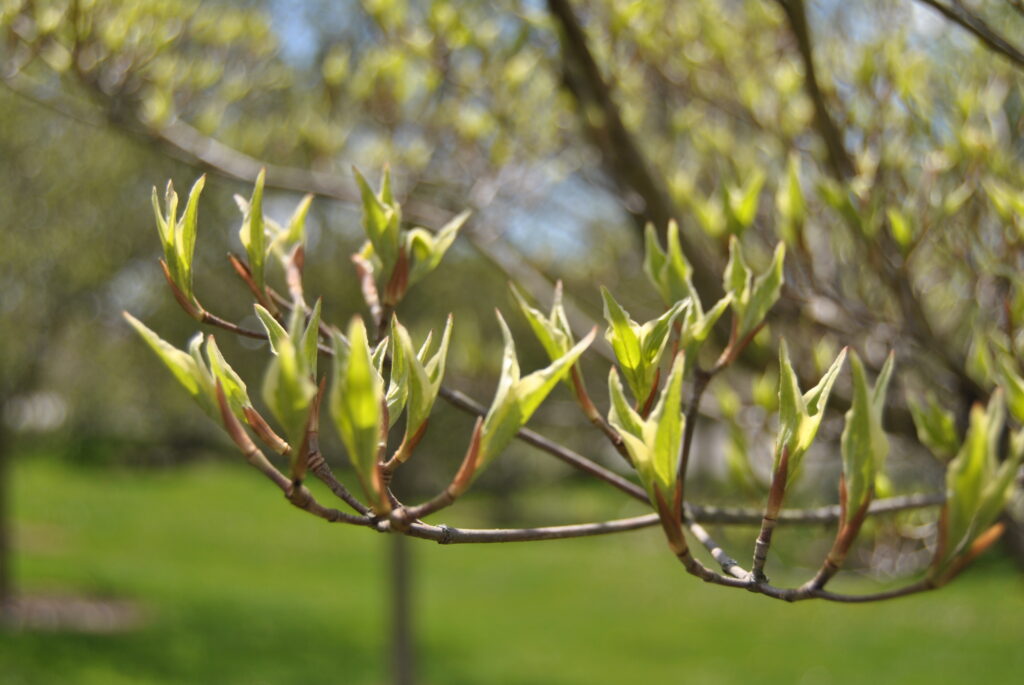
Oppositely-arranged, simple, elliptic to ovate leaves measure 2 to 4 inches long.
Cone / Fruit
The fruit is a fleshy, edible drupe measuring ½ to 1 inch in diameter.
Flower Description
Rounded clusters of small yellow flowers are subtended by four large white petal-like bracts. Pink-bracted forms are available in the nursery trade.
Bloom Time in Northeast Ohio
Late May to early June
Cultivars
‘Milky Way’ is a reliably heavy blooming selection readily available in the nursery trade. ‘Satomi’ is a well-known pink-bracted form that shows the best color during cool, cloudy spring weather. An improved pink selection, Scarlet Fire® (‘Rutpink’) has become very popular in recent years. Interesting variegated forms include ‘Wolf Eyes’, Samaritan® (‘Samzam’), and ‘Summer Fun’.
Available at
Secrest Plant Sales and selected local nurseries
Use the Secrest Aboretum Explorer to find locations where this plant is located on the Wooster campus.