Maackia amurensis
Common Name
Amur maackia
Family
Fabaceae (Pea Family)
Tree or plant type / form
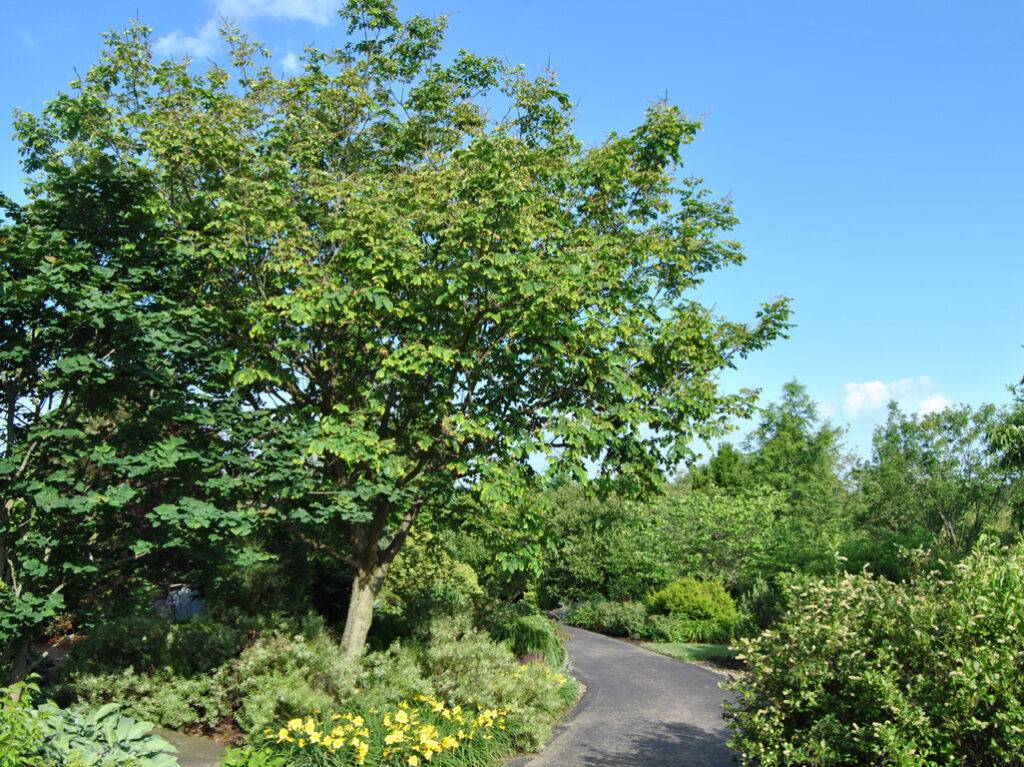
Woody deciduous tree with an upright spreading habit
Landscape Use
Small to medium-sized shade tree for residential landscapes, parks, along streets and other urban areas.
Season of interest and/or other ornamental feature(s)
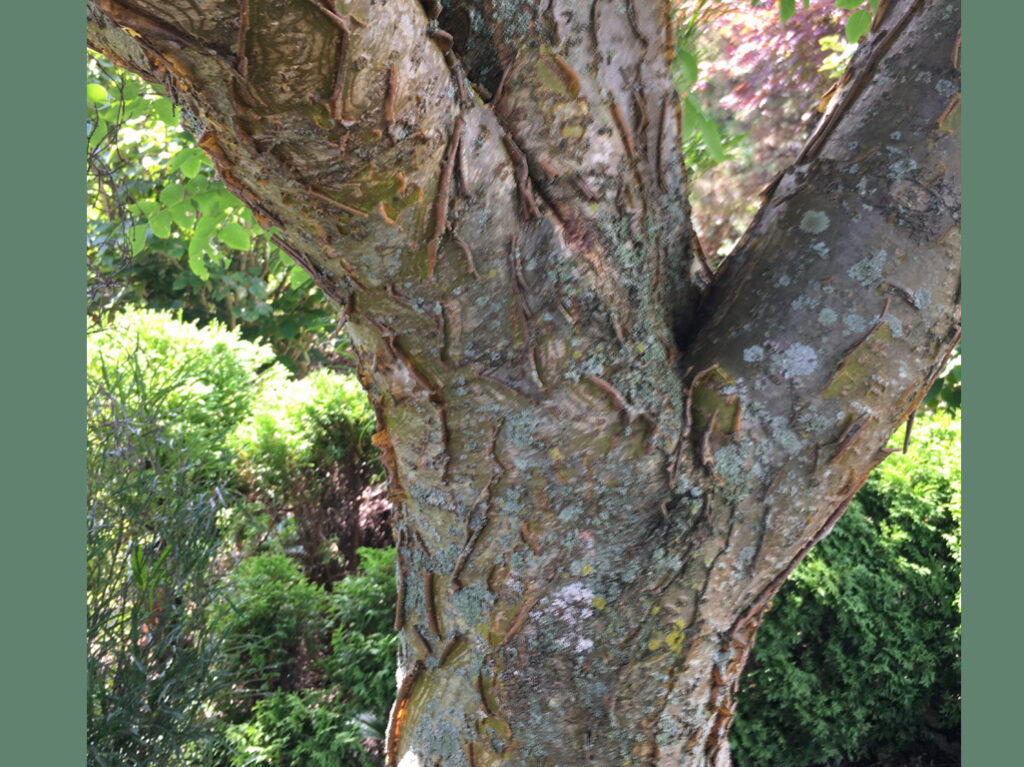
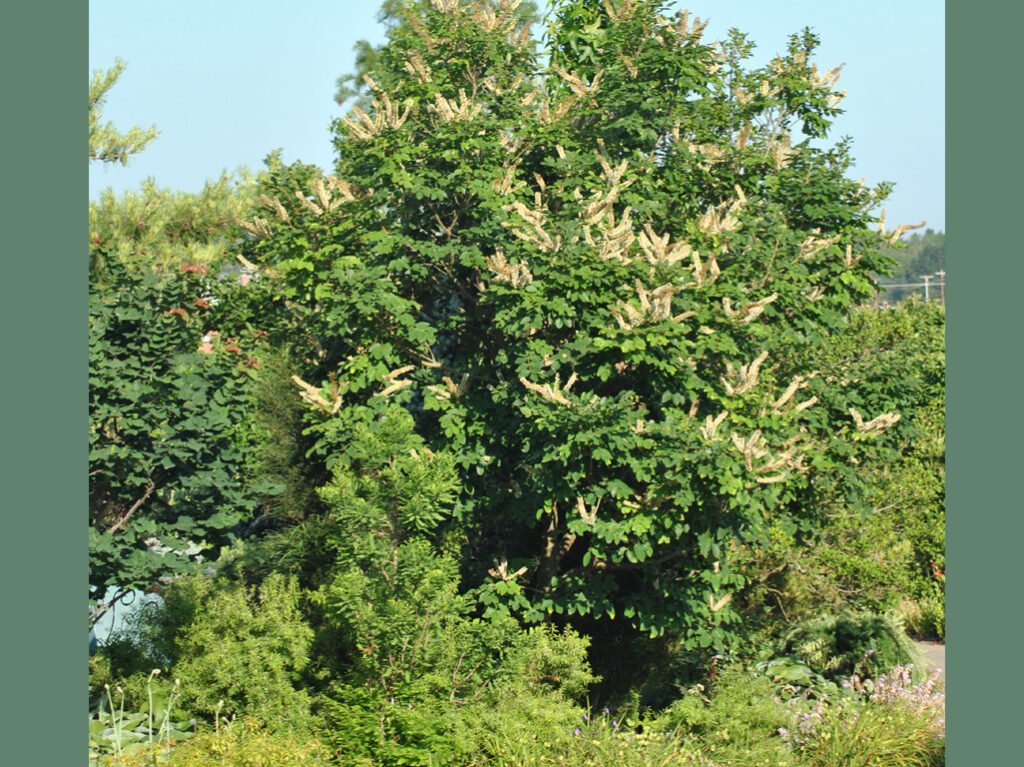
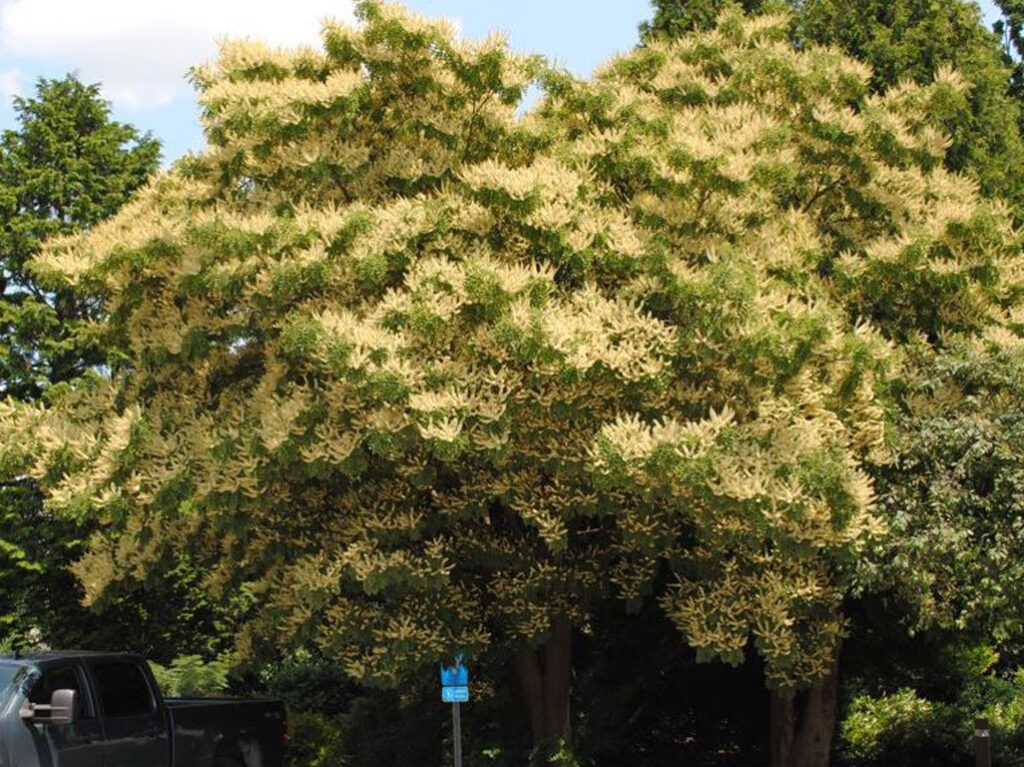
The compound leaves emerge silvery-green in spring, changing to medium green in summer. Four to six-inch-long clusters of creamy white flowers appear in early summer when few trees are in bloom. Exfoliating coppery-bronze bark adds winter interest.
Size at Landscape Maturity
Small to medium tree reaching 15 to 20 feet tall and 15 to 20 feet wide in 20 years; can eventually reach 30 to 40 feet tall and wide
Light exposure
Full sun to part shade
USDA Hardiness zones
3 – 8
Origin / Native locale
Eastern China, Russia, and Korea
Wildlife Value (incl. pollinators)
Favored by bees when in bloom
Soil Type & Drainage
Adaptable to a wide range of soils provided they are not consistently wet
Tolerances
Very tolerant of difficult urban environments; tolerates dry, infertile and alkaline soils
Leaf Description
Compound, odd-pinnate, dark olive-green leaves (7-13 leaflets each) are attractive in summer but exhibit no appreciable fall color.
Bloom Time in Northeast Ohio
Late June to early July
Flower Description
Erect, 4- to 6-inch-long racemes of white, fragrant (smells like mown grass) pea-like flowers
Cone / Fruit
Produces flat seed pods (2-4″ long) in fall
Available at
Secrest Arboretum Plant Discovery Days and selected local nurseries
Additional information
Several cultivars of Amur maackia have been selected for improved flowering, foliage quality, and/or growth habit. A few recommended varieties include ‘Summertime’, ‘Starburst’, and the newer ‘JFS-Schichtel1’ (sold as MaacNificent®) which features a more upright, vase-shaped crown than is typical for the species.
Use the Secrest Aboretum Explorer to find locations where this plant is located on the Wooster campus.