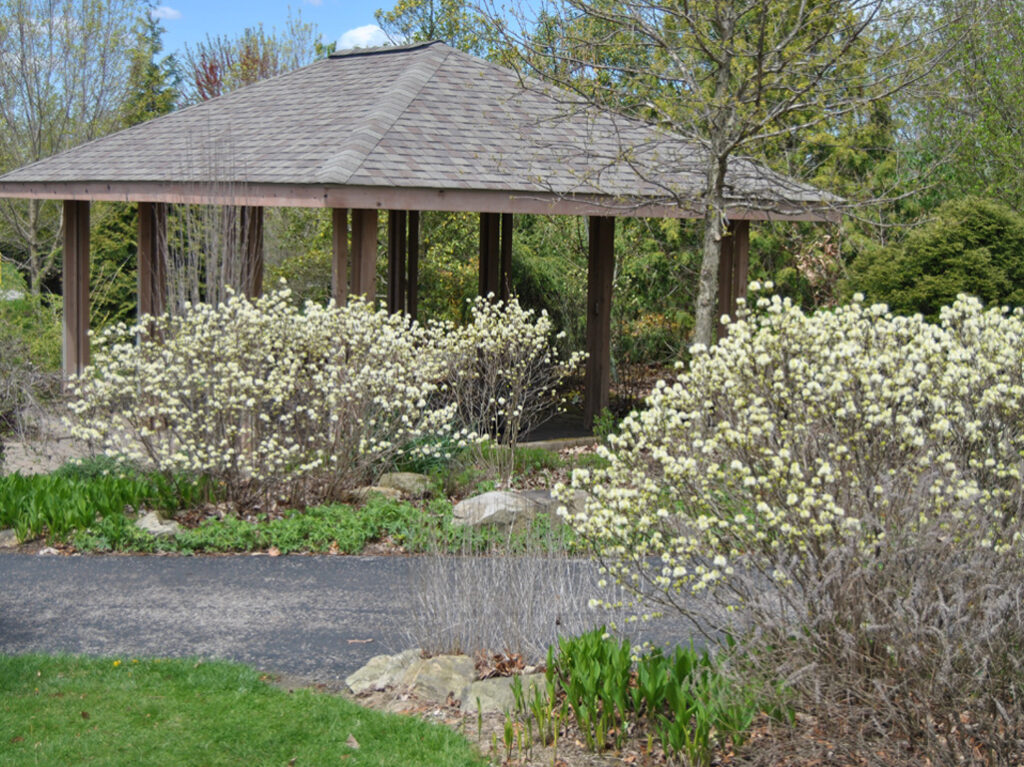
Fothergilla × intermedia ‘Mount Airy’
Common Name
Mount Airy Fothergilla or Witch-alder
Family
Hamamelidaceae
Tree or plant type / form
Deciduous shrub
Landscape Use
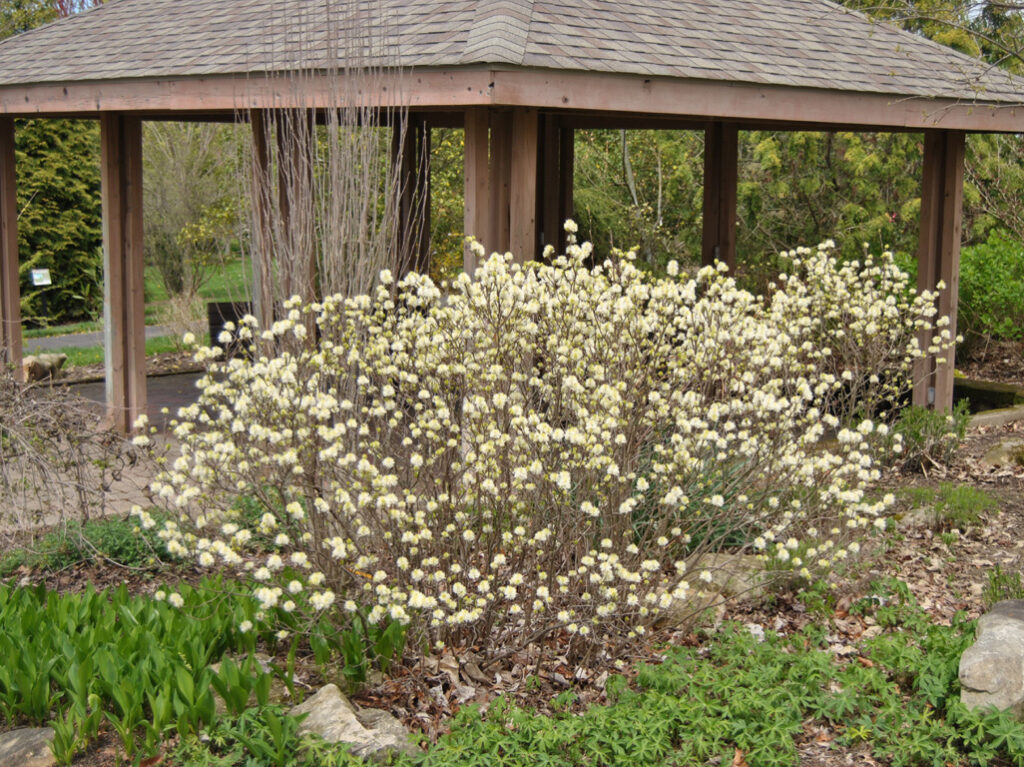
Useful as a single specimen or in groupings, masses, foundation plantings, or woodland gardens.
Season of interest and/or other ornamental feature(s)
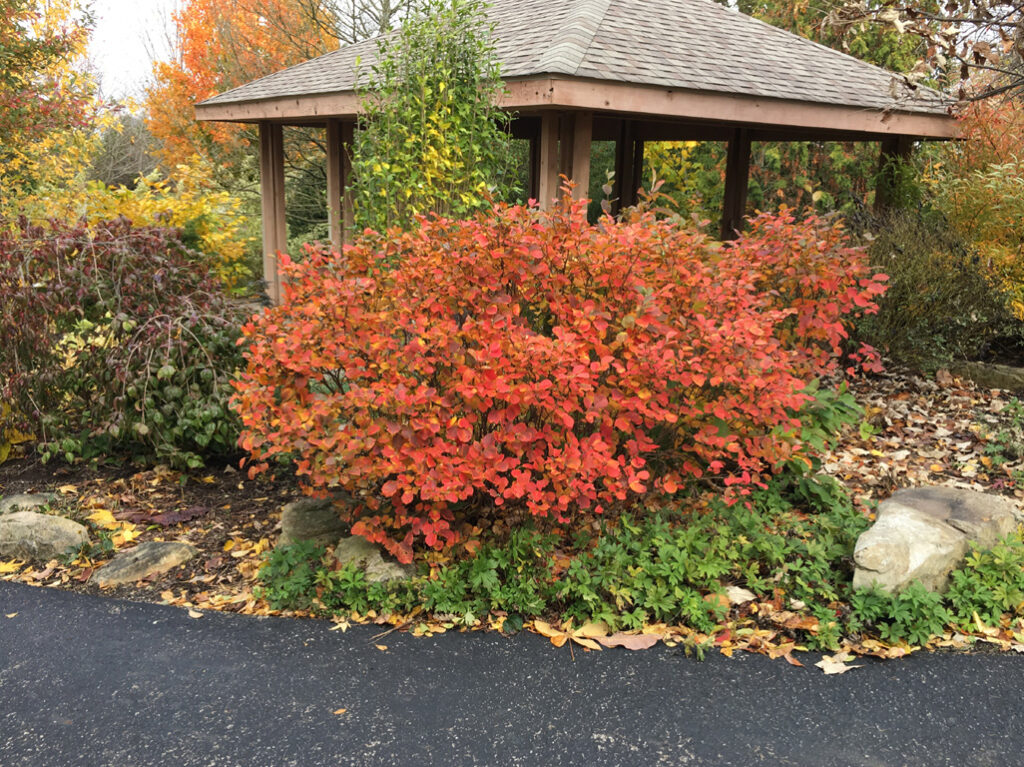
Profuse, lightly fragrant spring flowers are followed by dense, blue-green summer foliage and excellent autumn color.
Size at Landscape Maturity
4-5 feet tall with a similar spread in 10 years; expands slowly by root suckers.
Light exposure
Full sun to part shade.
USDA Hardiness zone
5 – 8
Origin / Native Locale
‘Mount Airy’ is a hybrid cultivar selected by plantsman Michael A. Dirr at the Mt. Airy Arboretum in Cincinnati, Ohio for its outstanding ornamental qualities and ease of propagation. Its parent species, F. gardenii and F. major are native to the southeastern United States.
Wildlife Value (incl. pollinators)|
Flowers provide an early season source of nectar for bees and other pollinators.
Soil Type & Drainage
Prefers moist, well-drained, acidic soil.
Tolerances
Tolerant of drier sites, moderate shade and alkaline soil; rarely browsed by deer.
Leaf Description
Alternately arranged, oval to obovate, 2-4 inches long with rounded teeth toward the apex; light green in spring then becoming deeper blue-green in summer. Fall color is generally an outstanding bright orange but can tend more toward yellow or red due to environmental conditions.
Cone / Fruit
Inconspicuous brown capsule.
Flower Description
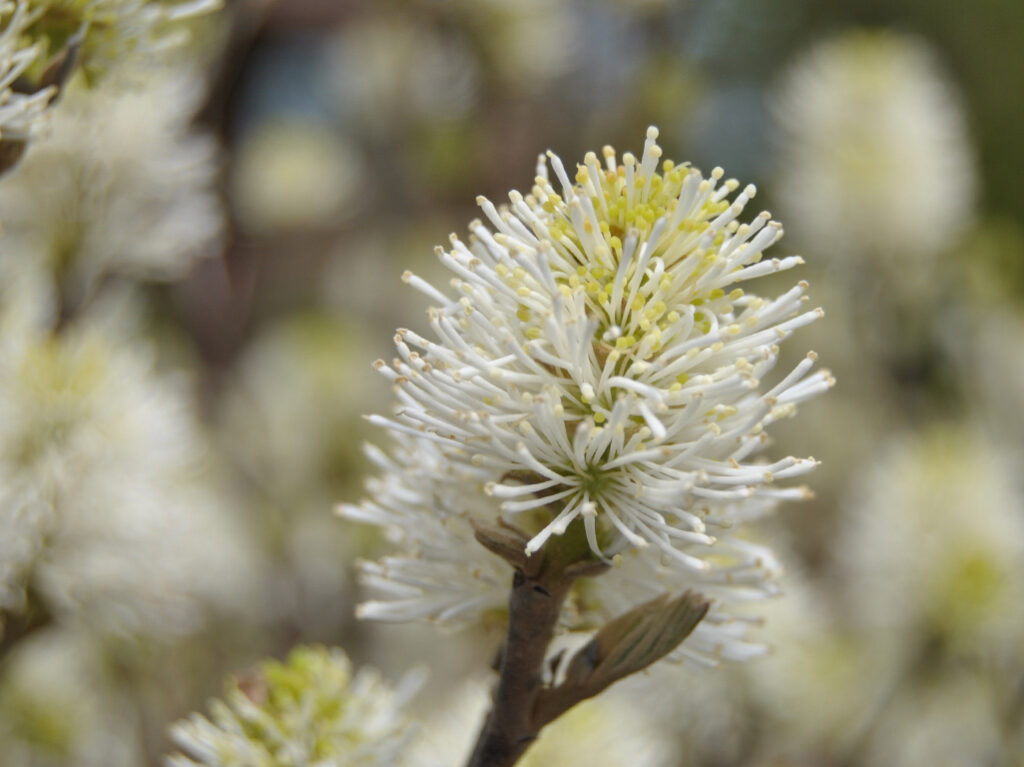
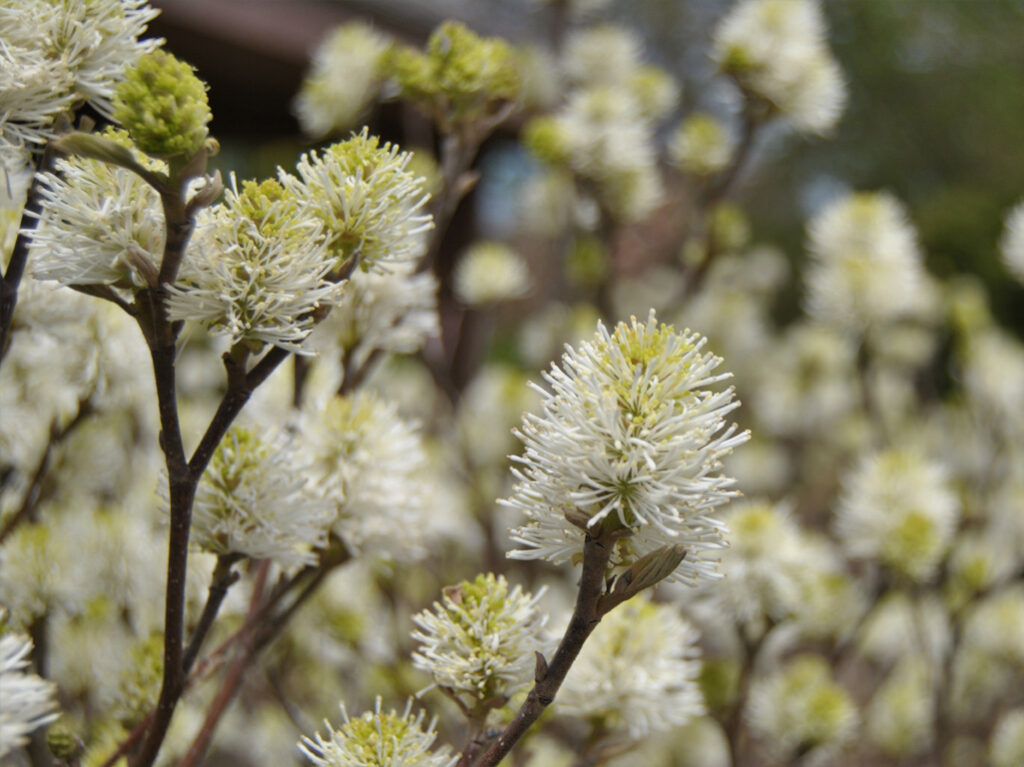
Terminal bottlebrush-like white flowers appear just before the leaves in mid spring and emit a sweet, honey-like fragrance. Measuring up to 2 inches long, the flower spikes lack petals but feature clusters of long stamens that lend a fuzzy appearance.
Bloom Time in Northeast Ohio
Late April to early May.
Cultivars
This selection is a cultivated variety that is ornamentally superior to seedlings of Fothergilla × intermedia.
Available at
Secrest Plant Sales and selected local nurseries
Use the Secrest Aboretum Explorer to find locations where this plant is located on the Wooster campus.