Quercus coccinea
Common Name
Scarlet Oak
Family
Fagaceae
Tree or plant type / form
Deciduous tree
Landscape Use
Useful as a shade or street tree, or in natural areas.
Season of interest and/or other ornamental feature(s)
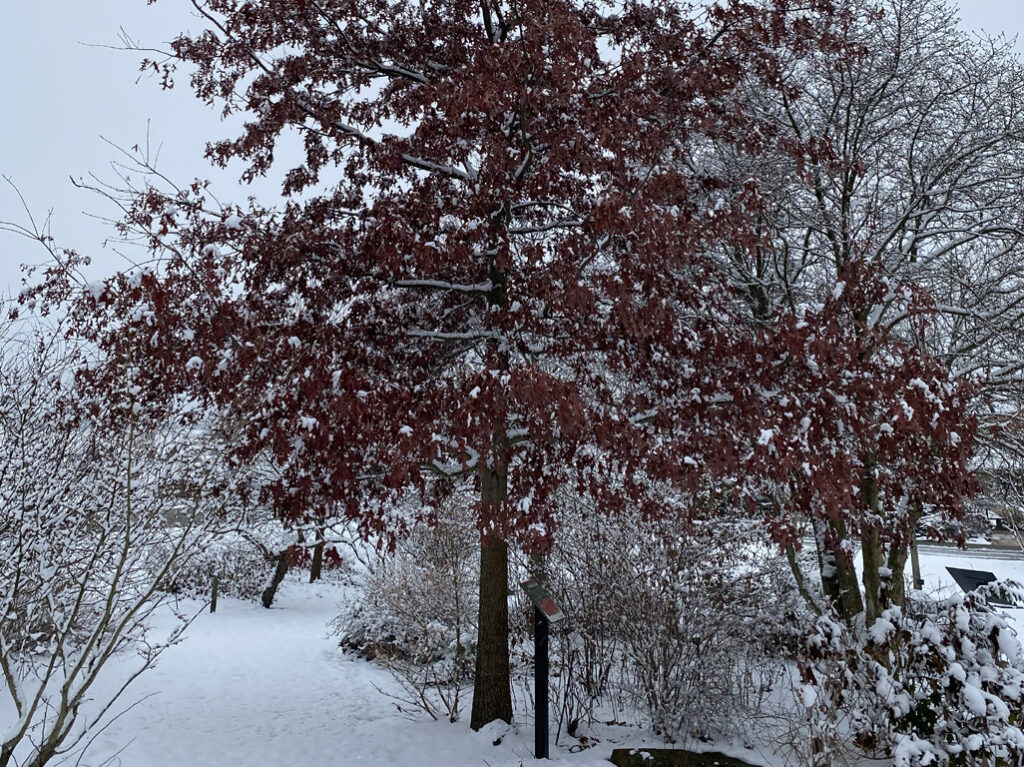
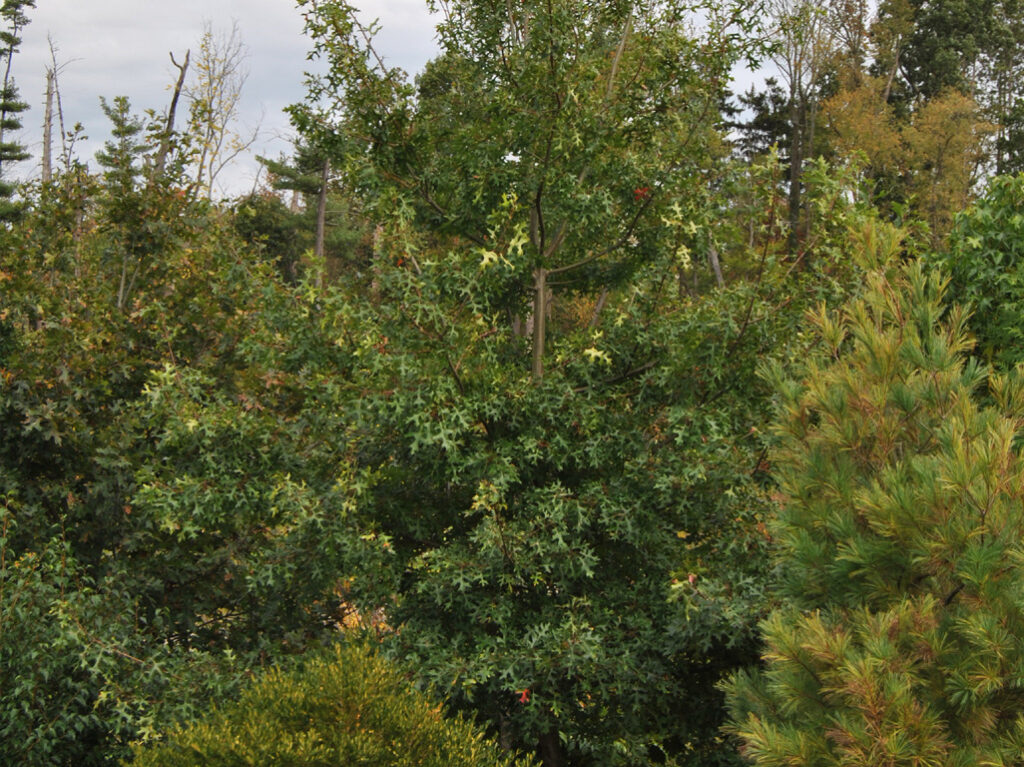
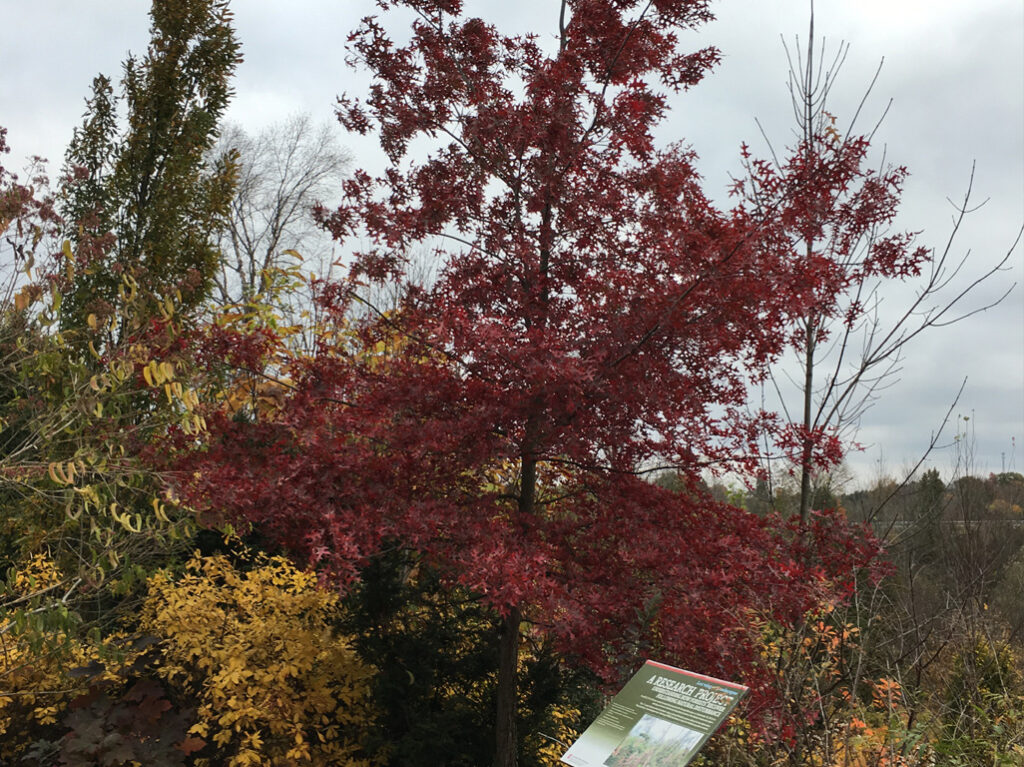
Foliage is an excellent glossy dark green in summer changing to scarlet in late fall.
Size at Landscape Maturity
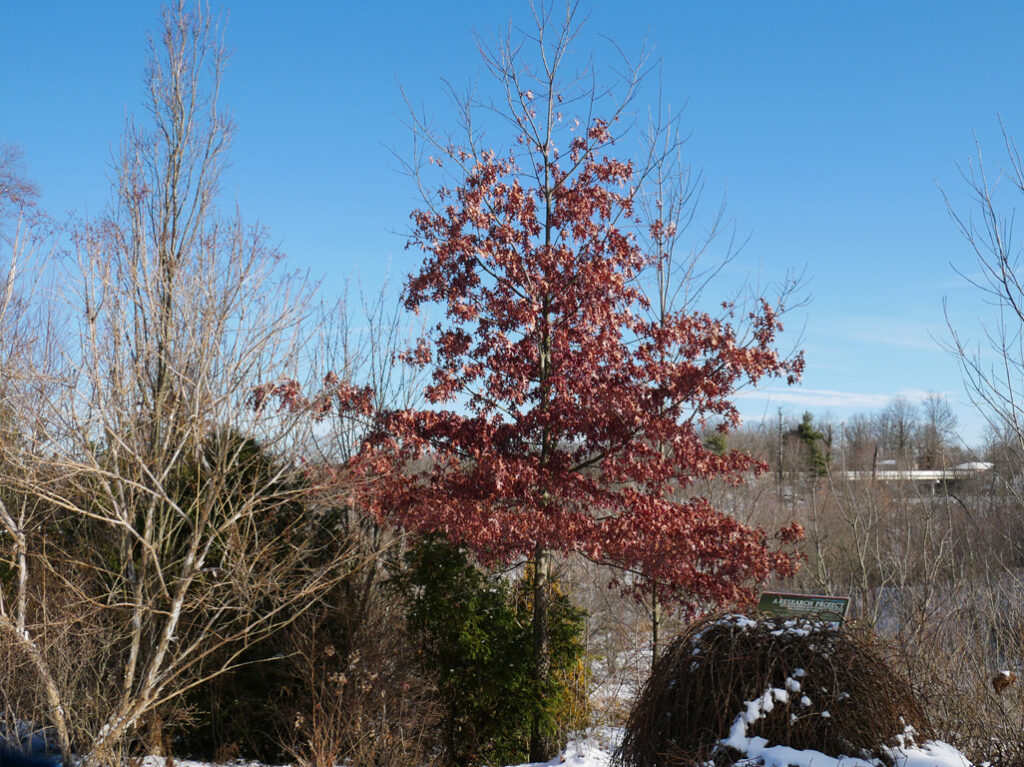
Large tree reaching 40 to 60 feet tall and 30 to 40 feet wide in 50 years; typically pyramidal in youth but becoming rounded with age.
Light exposure
Prefers full sun.
Hardiness zones
4 – 9
Origin / Native Locale
Central and eastern United States
Wildlife Value (incl. pollinators)
Like other oak species, Q. coccinea is a larval host for a wide range of butterfly and moth species. The acorns are eaten by woodpeckers, blue jays, small mammals, turkeys, deer and bears.
Soil Type & Drainage
Typically found on dry, upland sites in the wild but adaptable to most soil conditions, provided they are not continuously wet.
Tolerances
Tolerant of dry soil and drought conditions; can be grown around black walnut trees.
Leaf Description
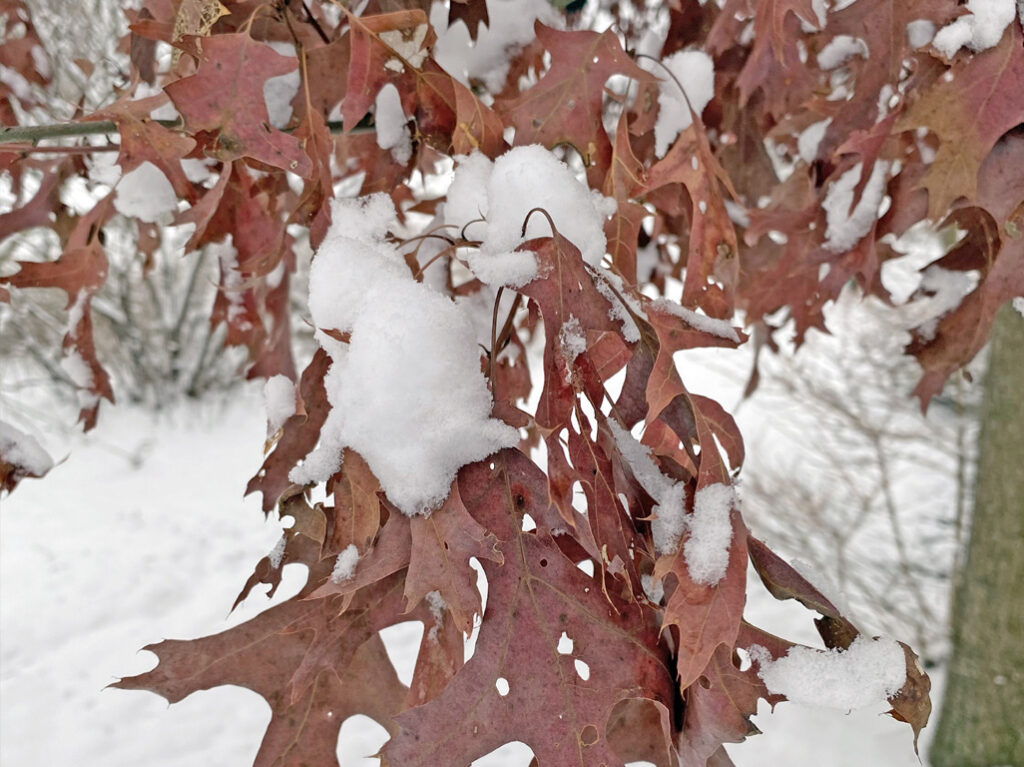
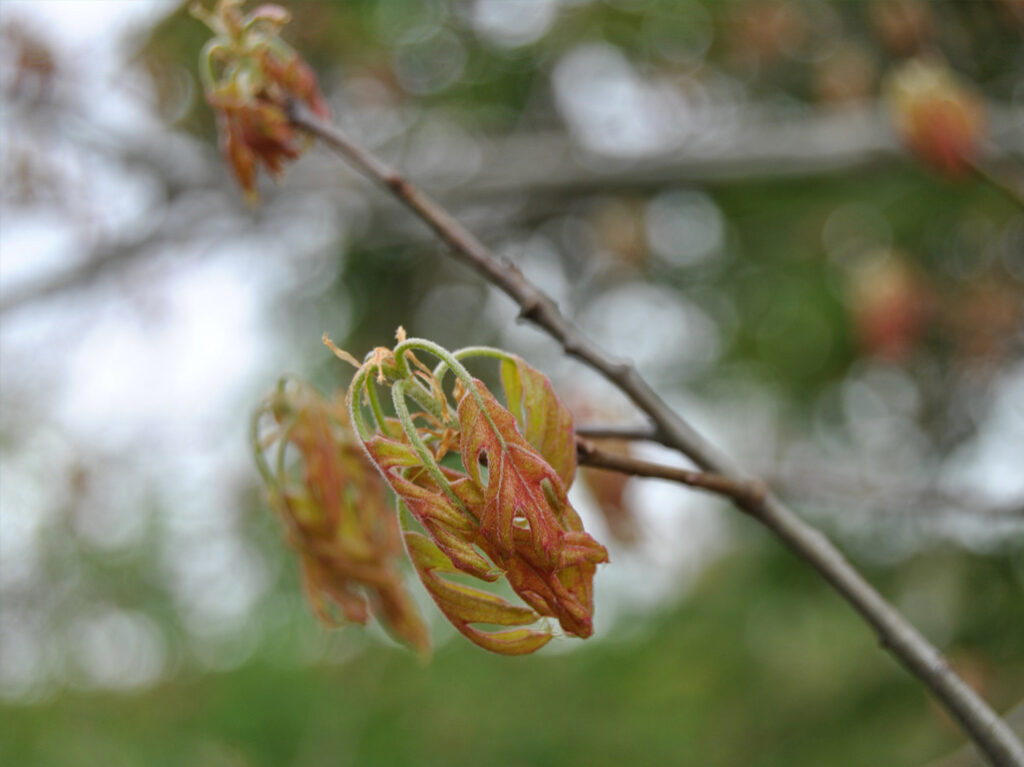
The leaves are 4 to 6 inches long and 3 to 4 inches wide, often with 7 deeply cut, bristle-tipped lobes; glossy green above and paler green below. Leaves consistently turn brilliant scarlet red in autumn. On younger trees, the foliage then turns brown and remains on the tree until spring, a phenomenon known as marcescence.
Cone / Fruit
The fruit is a 1/2 to 1 inch long acorn that requires two growing seasons to mature. Acorns occur singly or in pairs and are half covered by a deep bowl-like cap. The exposed acorn often has concentric, circular rings. Trees typically begin bearing acorns at about 20 years of age.
Flower Description
Not ornamentally significant; male flowers are slender yellow-green catkins while female flowers are small spikes.
Bloom Time in Northeast Ohio
Early to mid May
Available at
Secrest Plant Sales and selected local nurseries
Use the Secrest Aboretum Explorer to find locations where this plant is located on the Wooster campus.